Social and Relationship Capital

We continue to build stakeholder trust and long-term partnerships through customer-centric delivery, responsible supply chain practices, community development initiatives, and collaborative value creation. Our integrated approach helped deepen relationships with customers, suppliers, employees, communities, and shareholders while advancing inclusive and sustainable growth.
Stronger Ties
for Inclusive
Growth
Key Highlights of FY2026
-
,0
Number of Volunteers Involved in Community Initiatives
-
,
Beneficiaries of Community Initiatives
-
%
Order Share of Qualified ESG Assessed Vendors
-
.%
Customer Satisfaction Index (%)
Key Focus Areas
- Education and Skill Development
- Health and Well-being
- Climate Change and Environmental Sustainability
- Community Development
Alignment with SDGs





Corporate Social Responsibility
Our approach to Corporate Social Responsibility is centred on creating meaningful and measurable impact in the communities where we operate. Guided by our commitment to inclusive and sustainable development, we design and implement programmes that address critical social needs while empowering underserved communities. Through focused interventions and strong partnerships, we aim to enhance quality of life, build resilience, and contribute to long-term community development across our project geographies.
To improve the quality of life of the community in the identified geography of Tata Projects' CSR operations with a focus on women, youth, children and the affirmative action community.
- Skilling for a better living
- Transforming lives and livelihoods
- Transforming health and well-being
- Enhancing educational aspirations amongst adolescents
In FY2026, our social initiatives were organised around four primary focus areas:


Education and Skill
Development

Health
and Well-being

Climate Change
and Environmental
Sustainability

Community
Development
Education and Skill Development
To improve learning outcomes and life skills for adolescents from marginalised communities, while building vocational readiness among frontline workers and community youth.
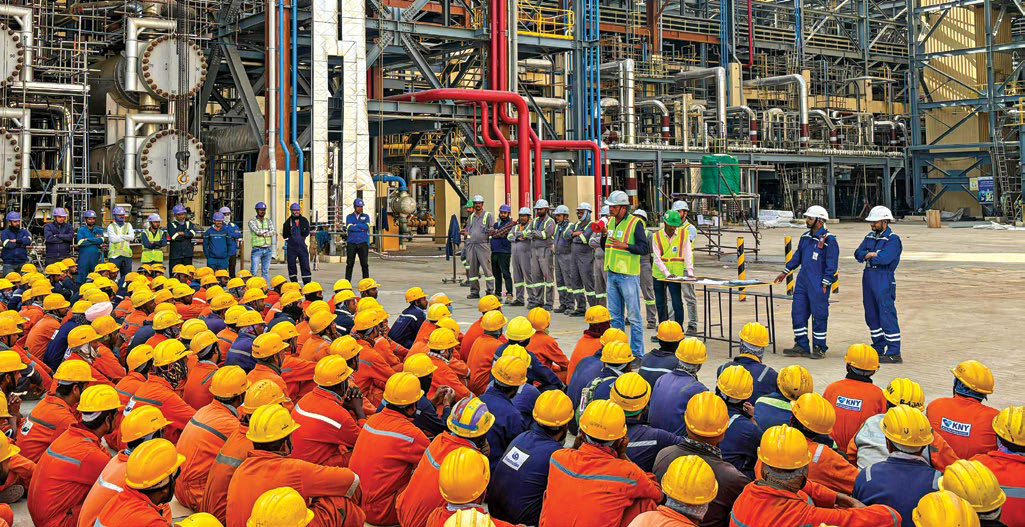
Fire Safety Training
1,580 students trained across KRCL, HYD11, HYD12 and CSMA project sites, building safety awareness among school-going youth in project geographies.
Solar Skills Training at ITI Mundra
A four-week technical programme conducted in collaboration with Tata Power and TPSDI, training 20 candidates in solar power systems to meet growing demand in the renewable energy sector.
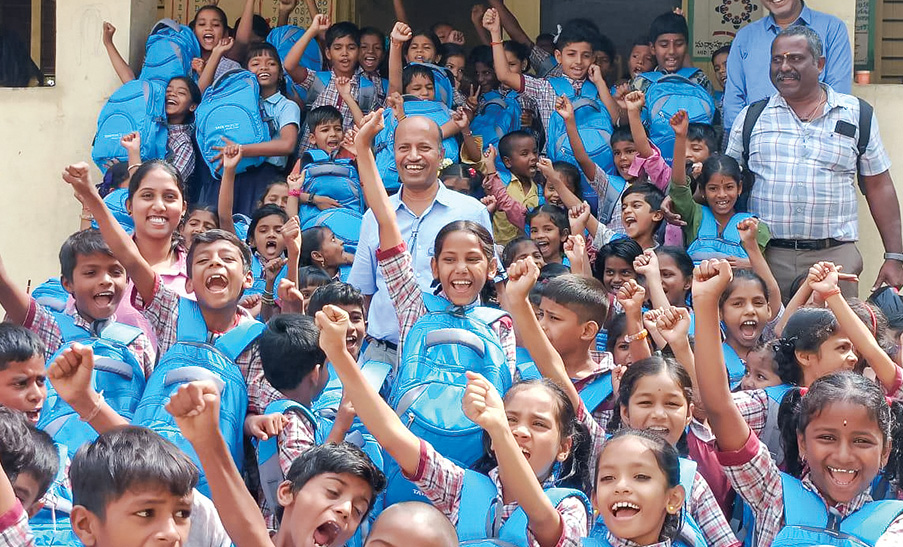
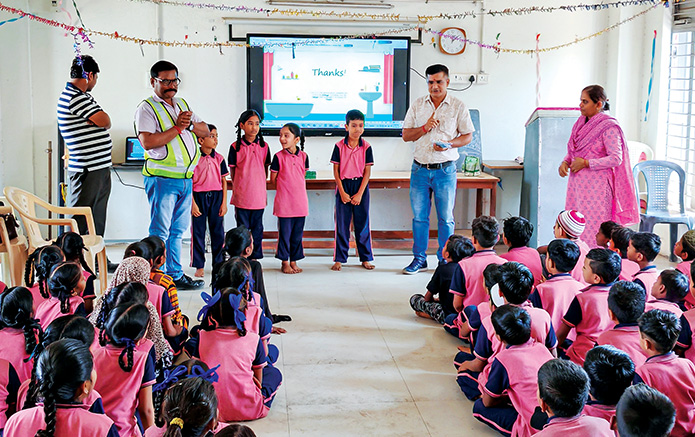
School Visits and Awareness Sessions
Volunteers conducted career counselling, drawing competitions, fire safety and hygiene awareness sessions at government schools near project sites, including HYD11, HYD12 and Ginger Kevadia.
-
,
Students Trained on Fire Safety across Project Sites
-
Candidates Trained in a Four-week Technical Training Programme
Health and Well-being
To safeguard the health of frontline workers and nearby communities through preventive care, welfare support and linkage to government health schemes.
Health Check-ups at Project Sites
Medical screening conducted for workers at NTPC Talcher (155 workers screened) and other project locations, providing early diagnosis and health monitoring.
Heat Relief Support
Sweet water, ORS and glucose distribution carried out during heatwave months at NTPC Talcher (450 workers), Borivali (500 workers) and other sites, protecting the workforce from heat-related health risks.
Hygiene Kits for Women Workers
Monthly hygiene kits, including sanitary pads, hand wash and sanitiser, distributed to women at TMU Umred across six cycles, reaching approximately 304 women.
Blood Donation Camps
Organised at Mumbai, Noida, Hyderabad and Nepal (REDNRP Province 2) with 121 volunteers donating blood for Thalassemia patients and other beneficiaries.
Project Adhikar/Adhikaar - Worker Social Security
An initiative to formally integrate frontline workers into government social protection schemes including Ayushman Bharat PMJAY (₹5 Lakh health cover), ABHA, PMSBY accident insurance, BOCW Act registration and PMSYM pension.
-
,+
Workers reached through health interventions
-
,
Workers Sensitised under Project Adhikaar
-
Women Supported through Hygiene Kits
-
,
Social Security Linkages Facilitated
Climate Change and Environmental Sustainability
To enhance green cover, promote environmental stewardship and foster biodiversity conservation among employees, workers and surrounding communities across project sites.
Tree Plantation Drives
Over 855 trees planted across project sites, including 600 at CGPL Mundra (Green Belt, 3 phases), 100 at NMHC Lothal, 70 at ANU Phase-2 Ahmedabad, 40 at NTPC Talcher, 25 at Ramban-Banihal and 20 at Ginger Kevadia.
Biodiversity Support - Bird Feeders and Nesting Boxes
Installed at multiple sites including Ginger Kevadia, NMHC Lothal, ANU Phase-2, TMU Umred and Ramban-Banihal, using recycled and waste materials.
Nursery Setup at Chandrog Village
A community nursery established at Maitra, Ramban, supporting local afforestation and reforestation efforts.
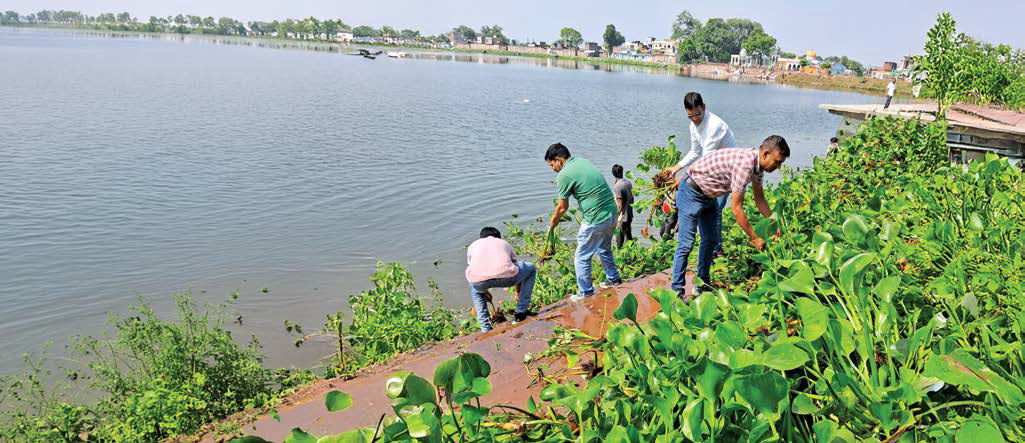
River Clean-up Drive
A clean-up conducted on the banks of the River Chenab at Ramban-Banihal, raising community awareness on plastic pollution and protecting aquatic ecosystems.
Solar Streetlights
20 solar-powered streetlights installed in Dewalibagad Village, Chamoli, Uttarakhand, providing sustainable lighting to a remote community.
Water ATM at Nithari, Noida
The 8th Water ATM installed at Sector 31, Nithari (near the Government Children Special Hospital), with a capacity of 1,200 litres/hour, providing RO and micron-filtered clean drinking water to the community.
Environmental Awareness Sessions
Conducted for school children in Ramban-Banihal on topics including carbon footprint, biodiversity and pollution control.
-
+
Trees Planted across Seven Project Sites
-
, L/hour
Capacity Water ATM installed at Nithari, Noida
-
Solar Streetlights Installed in Chamoli, Uttarakhand
Community Development
To strengthen community bonds near project sites, support frontline worker welfare and build disaster preparedness capacity across the organisation.
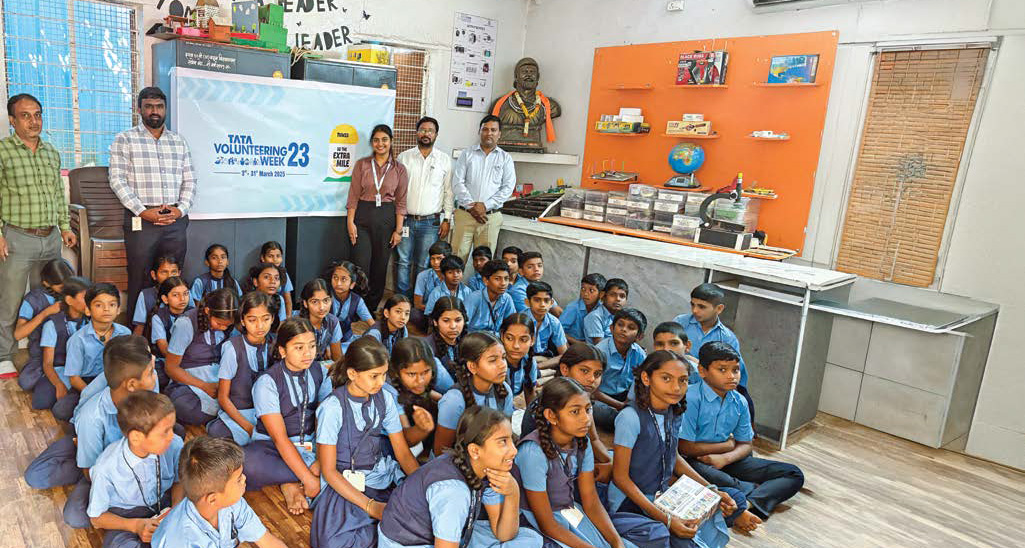
Tata Volunteering Week (TVW24)
1,411 volunteers from 3 corporate offices and 29 project sites participated in 61 activities across 12 states, clocking 3,248 volunteering hours and reaching 2,951 beneficiaries, with 1,020 saplings planted.
ProEngage - Skill-based Volunteering
The 21st Edition engaged 15 TPL employees in impactful NGO projects (Jan-May 2025); the 22nd Edition selected 33 employees with access to 2,500+ skill-based volunteering opportunities.
Disaster Response Capacity Building
We hosted a State Disaster Response Meeting in Hyderabad (September 2025) with 35+ participants from 18 Tata Group companies. Three TPL women were inducted into the One Tata Disaster Response Cadre as Project Managers, forming the first exclusively women cadre.
Community Support
Separate donations made to orphanages (65 children) and an old age home (25 beneficiaries) in the Nagpur region.
Community Infrastructure Support
Exhaust fans donated to an ITI welder training room at the Kevadia project; a blood donation drive organised in Nepal (REDNRP Province 2) with 55 volunteers including TPL employees, clients, contractors and government representatives.
-
,
Volunteers Engaged in the Tata Volunteering Week
-
,
Volunteering hours clocked during the Tata Volunteering Week
-
,+
Community Beneficiaries Supported through Festive Giving
Community Complaints and Resolutions
We are committed to maintaining transparent and accessible mechanisms for communities to raise concerns and seek timely resolution. Our approach focuses on ensuring fairness, accountability, and responsiveness, while strengthening trust with stakeholders across our project locations.
The Tata Code of Conduct provides a structured framework for raising concerns, promoting whistle-blowing, and safeguarding individuals against retaliation. Our Whistle-blower Policy offers multiple reporting channels, including options for anonymous submissions. Reported concerns are investigated by independent and trained professionals under the supervision of the Chief Ethics Counsellor, who reports to the Managing Director or the Audit Committee. For complex cases, external forensic or legal experts may be engaged. Findings are reviewed by the Apex Ethics Council, which recommends appropriate corrective and preventive actions, supported by a defined disciplinary framework. The Audit Committee further monitors trends and outcomes through regular oversight, ensuring consistency and effectiveness in grievance redressal.
Customer Relationship Management
Our customer relationship management approach is embedded across the entire project lifecycle, from bidding and execution to commissioning, handover, and post-completion support. We place strong emphasis on being a truly customer-centric organisation, proactively understanding client needs and supporting them in achieving their operational and sustainability goals, including carbon neutrality. This approach is reinforced through structured feedback mechanisms such as Customer Assessment Scores and Quality Compliance Index ratings, continuous monitoring of customer-issued non-conformances, and targeted training initiatives that position us as trusted knowledge partners.
-
.%
Overall Rating in FY2026
-
.%
Quality Rating in FY2026
-
.%
Overall Rating in FY2026

We strengthened our customer-centric delivery approach in FY2026 through structured feedback systems, robust quality assurance practices, and dedicated completion processes to ensure consistent value creation across projects. In parallel, lessons from completed projects were systematically captured and integrated through our Organisational Debrief Programme, enhancing bid quality and strengthening risk calibration for future projects.
Quality and Customer Satisfaction
Our focus on quality and customer satisfaction is reinforced through defined metrics and knowledge-sharing platforms. The Customer Satisfaction Index (CSI), tracked quarterly, stood at 97.10% in FY2026, reflecting continued emphasis on structured improvement actions. The Quality Compliance Index (QCI) was maintained at 96.61%, ensuring adherence to established quality standards. Additionally, 63 Quality Connect Series sessions were conducted with internal and external experts, reaching over 10,000 participants and generating 75,000+ Viva Engage views, strengthening shared quality knowledge across teams and clients.
Complete Delivery Excellence
Our 'Complete Ready Delivery' philosophy ensures that the customer perspective is embedded into every stage of project execution, enabling us to anticipate needs and support seamless transition into operations. This is supported by a dedicated Completions Team that manages the final stages of delivery, from documentation and approvals to testing, commissioning, and formal handover, ensuring smooth and efficient project closure.
Feedback and Continuous Improvement
Structured monthly and quarterly client feedback mechanisms are in place to capture insights and drive continuous improvement. These are complemented by internal audits aligned with quality, compliance, and efficiency benchmarks, ensuring responsiveness and consistency in delivery.
Our branding and marketing efforts focus on showcasing our capabilities, thought leadership, and impact through strategic storytelling and digital engagement. By leveraging multiple platforms, we aim to strengthen brand visibility and communicate our role in building sustainable and future-ready infrastructure.
The India@100 video series continues to serve as a flagship platform for highlighting our contribution to nation-building and sustainability. Following the success of the earlier seasons with over 5.9 Million impressions, Season 3 was launched on 15th April, 2025 with a focus on environmental leadership. The series explores four key themes - Water Neutrality, Green Materials Integration, Renewable Energy Integration, and Cultural Heritage Preservation - and is released as weekly episodes across our digital platforms, including LinkedIn. Aligned with the Tata Group's Project Aalingana, the series reinforces our commitment to ESG-led storytelling and stakeholder engagement.
Suppliers
Tata Projects' supply chain forms the backbone of our project delivery capability. We manage an extensive ecosystem of vendors and strategic partners, engaging them through structured processes that emphasise ethical conduct, safety, quality and sustainability. In FY2026, we enhanced our supplier ecosystem through digitalisation, ESG assessment frameworks and formalised strategic partnerships.
Supplier engagement at Tata Projects is driven through strategic partnerships, digital procurement systems, and structured performance frameworks. In FY2026, we further strengthened these relationships through initiatives such as the Strategic Partners Meet in Mumbai, which brought together 50+ partner companies and reinforced our vision of executing a significant share of project volumes through trusted partners. Ethical practices are embedded across the supply chain, including business ethics training for contract workforce personnel as part of partner engagement.
-
.%
Green Vendor Spend
-
.%
Sourcing from MSME

Strengthening Partnerships for Predictable EPC Delivery
In September 2025, Tata Projects hosted a Strategic Partners Meet bringing together more than 50 partner companies engaged through recent agreements. The event focused on deepening collaboration across the project lifecycle and aligning strategic partners with the Company's long-term vision for execution excellence, operational agility and sustainable growth.
Senior leadership and key functional teams participated in the discussions, reinforcing the critical role of partnerships in delivering complex infrastructure projects at scale. The leadership address highlighted the Company's transition towards a sustainable, technology-driven EPC model, with increasing emphasis on partner-led growth, digital execution and cost competitiveness. As part of this strategy, Tata Projects aims to execute nearly 80% of project volumes through strategic partners, creating a more integrated and resilient execution ecosystem.
The engagement also outlined key value propositions for partners, including multi-year project visibility, stable business volumes, joint value engineering initiatives, capability enhancement in safety, quality, ESG and digital practices, faster and digitised transaction processes, and opportunities to participate in marquee infrastructure projects.
The event further reinforced the importance of strong supplier relationships and collaborative procurement practices in addressing infrastructure execution challenges and strengthening supply chain resilience. A dedicated panel discussion on navigating supply chain complexities in the EPC sector added further industry perspective and strategic insight. Overall, the meet strengthened mutual commitment towards collaborative growth, operational excellence and long-term value creation across the EPC ecosystem.
Strategic Partnerships
We enabled long-term collaboration through the formalisation of Frame Agreements and MoUs with more than 50 companies, ensuring contractual stability and shared accountability. Strategic MoUs with Tata Steel and JSW Steel secured reliable rebar supply and price predictability in key projects. In line with responsible sourcing, we also partnered with CSIR-Indian Institute of Petroleum (CSIR-IIP) for the indigenous development of Green Diesel from local feedstock and collaborated with a leading US-based technology provider to enable deployment of green hydrogen solutions in infrastructure projects, reinforcing our commitment to sustainable and future-ready supply chains.
Tata Projects was selected as the EPC partner for SAF One Energy Management Limited's HEFA-based Sustainable Aviation Fuel (SAF) project in the Middle East, marking a significant step in advancing low-carbon aviation infrastructure. The project will convert used cooking oil and other waste-based feedstocks into sustainable aviation fuel, supporting regional and global decarbonisation efforts. Leveraging standardised designs, advanced construction methodologies and modular execution strategies, we will deliver an integrated and scalable EPC solution for this first-of-its-kind SAF facility in the region.
Digital Procurement and Supplier Enablement
Our SAP Ariba Supplier Portal drives efficiency and transparency in supplier management, with over 72,000 vendors onboarded. Process digitalisation has reduced vendor registration turnaround time from 15 days to 5.25 days. The rollout of the Ariba Supplier Lifecycle Performance (SLP) module, with automated PAN and GST validation, has further enhanced onboarding accuracy, compliance, and overall supplier governance.
We enable efficient supplier onboarding through the SAP Ariba platform, providing a seamless, digital-first registration process supported by automated data validation through government portals. Every new supplier onboarded through Ariba undergoes verification of critical details such as PAN, GST, MSME status, bank account information, and email credentials, ensuring accuracy, compliance, and governance from the outset. This integrated approach enhances efficiency, reduces manual intervention, and improves the quality of supplier master data.
Procurement decision-making is further enhanced through Ariba Sourcing, which streamlines sourcing processes via RFx and reverse auctions. In FY2026, the Purchase Approval Note (PAN) form was upgraded with 16+ additional data fields, improving visibility into sourcing decisions, strengthening analytical insights, and driving closer alignment with business and compliance objectives.
-
,000
Vendors Onboarded through SAP Ariba Supplier Portal
We extend our strong safety culture across the supply chain by integrating health and safety standards into supplier engagement practices. These expectations are embedded within our Responsible Supply Chain Management Policy, which requires supply chain partners to provide safe and healthy workplaces for employees and visitors through appropriate management practices aimed at preventing accidents and injuries.
We expect our supply chain partners to comply with the human rights and labour requirements prescribed under Tata Projects' Business and Human Rights framework. Suppliers are required to uphold fundamental labour rights principles and proactively address and remediate any adverse human rights impacts arising from their business operations.
We integrate environmental, social, and governance (ESG) considerations into our supplier evaluation processes to promote responsible and sustainable supply chain practices. Through our Responsible Supply Chain Management framework, suppliers are assessed on key parameters such as ethics, labour practices, health and safety, and environmental performance. This is supported by internal due diligence for supply chain partners, enabling systematic risk identification, compliance validation, and alignment with our ESG expectations.
-
New Suppliers Screened Using ESG Criteria
-
New Suppliers Considered ESG Compliant
Process Improvement: Supplier Capability Evaluation (CE)
We streamlined and standardised our Supplier Capability Evaluation (CE) process to strengthen governance, enhance transparency and improve onboarding efficiency across the enterprise. The revised framework integrates Capability Evaluation and Product Qualification under a single Standard Operating Procedure (SOP), enabling greater process consistency and operational clarity.
The enhanced process introduces clearly defined category-wise applicability, supported by structured roles, timelines and objective decision-making criteria. We also expanded the evaluation framework to include Supply, Installation, Testing and Commissioning (SITC) contractors, broadening the scope of supplier assessment and strengthening execution readiness across projects.
In addition, we refined the acceptance criteria and scoring methodology, with evaluation formats aligned to the latest Business Excellence guidelines. These improvements enable faster, risk-based supplier onboarding while maintaining robust process controls, standardisation and governance discipline across our supplier ecosystem.