Natural Capital

Aligned with India's Net Zero Goals and Tata Group's Project Aalingana
The Tata Group's sustainability approach is anchored in Project Aalingana, guided
by a vision to protect the planet while shaping the future through next-generation
technologies. Building on a strong legacy of social and environmental responsibility,
the initiative seeks to position the Group among global leaders in sustainability.
Building the Base
for a Greener
Nation
Key Highlights of FY2026
-
%
Reduction in Emission Intensity
-
₹. Cr
CAPEX on Renewable Energy Sources for Deployment of Emission Reduction Levers
-
%
Of All Project Sites Connected to Grid Power
-
%
Of Lights across All Projects are LED
-
%
Wastewater Recycled
Expanded Scope 3 Emissions
Monitoring and Reporting Coverage
to 7 of 8 Applicable Categories
Key Focus Areas
- Emissions Management
- Air Quality Management
- Energy Management
- Water Management
- Waste Management
- Biodiversity
Alignment with SDGs


integrates sustainability into core business strategy and is structured around three interconnected pillars:
Driving
Net Zero
Net Zero by 2045
(including Scope 3 emissions)
Pioneering Circular
Economies
Zero waste to landfill
by 2030
Preserving Nature
and Biodiversity
Achieve leadership in thriving Indian Nature-based Solutions (NbS) market by 2030
India's transition to a low-carbon future, driven by clean energy, resilient infrastructure, and sustainable urban systems continues to shape the evolution of Tata Projects. Aligned with the Tata Group's Net Zero ambition for 2045, the Company has been pivotal in India's infrastructure journey - from enabling conventional power and transmission networks to advancing low-carbon solutions such as flue gas desulphurisation systems, renewable energy evacuation, metro rail networks, and large- scale clean manufacturing facilities. Today, Tata Projects is actively contributing to sectors such as renewable energy, energy storage, nuclear and pumped storage projects, while embedding digital execution, resource-efficient construction, and ESG-led practices across its portfolio.
Building on this foundation, Tata Projects has developed a structured Net Zero roadmap anchored in robust baseline assessment, emissions target setting, peer benchmarking, GHG inventory strengthening, emissions forecasting, and identification of abatement levers. This roadmap was developed in the previous financial year, with targets of reducing Scope 1 + 2 emissions by 25% by 2030 and achieving Net Zero emissions by 2045.
Our strategic levers to achieve this roadmap covers 12 key areas, across Scope 1 and 2 emissions, including interventions such as dual-fuel gensets, electrification of equipment, B20 fuel, fuel cells, and more, supported by the procurement of RECs to offset residual emissions.
As per the roadmap, we are on track for the current reporting period, FY2026, with emissions intensity decreased by ~9% from previous year.
Emissions Management

The Greenhouse Gas (GHG) emissions inventory was prepared in accordance with the GHG Protocol Corporate Accounting and Reporting Standard, applying the operational control approach to define organisational boundaries. 84 project sites, 3 corporate offices and 1 Manufacturing unit are covered, with no major exclusions. Emissions were quantified across Scope 1 (direct emissions), Scope 2 (energy indirect emissions), and Scope 3 (other indirect emissions).
A Scope 3 assessment was undertaken to identify applicable categories for Tata Projects. Of the applicable eight categories, seven are being reported with the eight category 'Upstream leased asset' being conditionally applicable only. The justification for each category are clearly explained in our CDP annual climate change disclosure.
-
, tCO2e
Scope 1
-
, tCO2e
Scope 2
-
,, tCO2e
Scope 3
Scope 3 Category Breakup for FY2026
-
,00,0 tCO2e
Category 1: Purchased goods and services
-
, tCO2e
Category 2: Capital goods
-
,056 tCO2e
Category 3: Fuel and energy-related activities
-
, tCO2e
Category 4: Upstream transportation and distribution
-
tCO2e
Category 5: Waste generated in activities
-
, tCO2e
Category 6: Business travel
-
, tCO2e
Category 7: Employee Commuting
Key Initiatives Taken in FY2026
Aligned with the organisation's Net Zero Roadmap, two strategic initiatives were prioritized for this financial year:
- RFID tagging of all in-house diesel bowsers
- Enhancement of renewable energy capacity across our sites
As on date, we have successfully rolled out RFID tagging at 16 of our projects equipped with our own diesel bowsers, strengthening fuel management and accountability. In parallel, we increased our installed renewable energy capacity from 1.4 MWp to over 1.6 MWp - a growth of ~15% during this financial year. These achievements mark significant progress towards our sustainability commitments and long-term decarbonisation goals.

throughout the Years

Tata Projects Net Zero Roadmap
Tata Projects has embarked on a structured journey to develop and operationalise its Net Zero roadmap, aligned with the Tata Group's sustainability vision under Project Aalingana. This roadmap reflects our commitment to integrating climate action into core business strategy and advancing towards a low-carbon future.
The decarbonisation strategy at TPL is being developed through a structured and data-driven approach:
Baseline Assessment
Total baseline emissions (Scope 1 and Scope 2) stood at 109.5 ktCO₂e in FY2025, primarily driven by diesel consumption and grid electricity usage.
Emissions Target Assessment
Under a Business-as-Usual (BAU) scenario, Scope 1 and Scope 2 emissions across SBUs are projected to increase to 193 ktCO₂e by FY2045, factoring in an inflation-adjusted annual business growth of approximately 6% until 2030 and 2% thereafter. Scope 3 emissions were estimated at 1,552 ktCO₂e, largely driven by purchased materials such as steel, cement, and aluminium. In alignment with Project Aalingana, TPL has set targets to reduce Scope 1 and 2 emissions by 25% by 2030 and achieve Net Zero emissions by 2045.
Approach
A comprehensive methodology has been adopted to assess decarbonisation pathways, including:
- Peer Benchmarking: Evaluating climate strategies of leading EPC players to identify best practices
- GHG Inventory Review: Strengthening Scope 3 accounting through supply chain mapping, material category identification, and standardised data frameworks
- Emissions Forecasting: Comparing BAU projections with Science Based Targets initiative (SBTi)-aligned scenarios through 2045
Abatement Strategy
The decarbonisation roadmap is built on the identification and feasibility assessment of emission reduction levers across seven business units. Two modelling scenarios have been considered - a most plausible scenario and an accelerated scenario. The most plausible scenario reflects current trends in technical feasibility and scalability of Scope 1 and Scope 2 interventions, with a phased adoption of advanced technologies such as fuel cell generator sets and fully electrified construction equipment.
The accelerated scenario assumes faster adoption and scaling of these interventions, supported by improved market readiness and technological availability. In this pathway, solutions such as equipment electrification and fuel cell generators are deployed more aggressively to maximise emissions reduction.
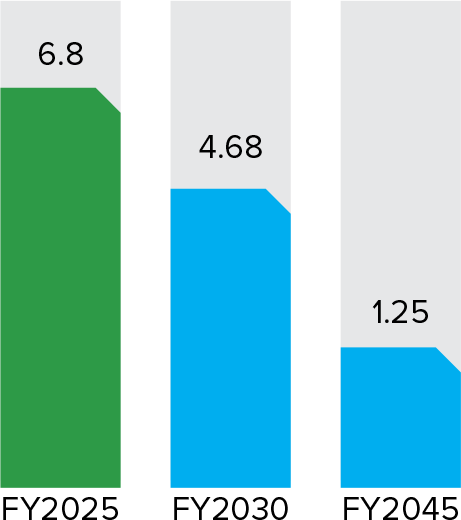
Under the most plausible scenario, TPL can achieve up to 80% reduction in Scope 1 and Scope 2 emissions by 2045, with a target to reduce emission intensity by 32% by 2030 and 79% by 2045.
Interventions
A high-level feasibility assessment was conducted for each identified intervention, evaluating factors such as ease of implementation, emissions reduction potential, capital and operating costs (CAPEX and OPEX), cost savings, and outputs from the Minimum Abatement Cost Curve (MACC). The assessment also considered technology maturity, along with environmental and socio-economic impacts. Each intervention was systematically scored and prioritised using a defined evaluation framework.
Strategic Levers
The roadmap is structured around 12 key levers across Scope 1 and Scope 2, including initiatives such as dual-fuel generator sets, equipment electrification, use of B20 fuel, and fuel cell technologies. These are complemented by the procurement of Renewable Energy Certificates (RECs) to offset residual emissions.
Target Allocation
Emission reduction targets are distributed across Strategic Business Units (SBUs) based on a polluter pays principle, where units with higher emission intensity are assigned proportionately higher reduction targets relative to their baseline.
SBU-level Targets
Detailed emission reduction targets have been mapped for each SBU, with a phased implementation plan extending from 2030 to 2045.
Emission Intensity Pathway
(tCO2/₹ Cr)
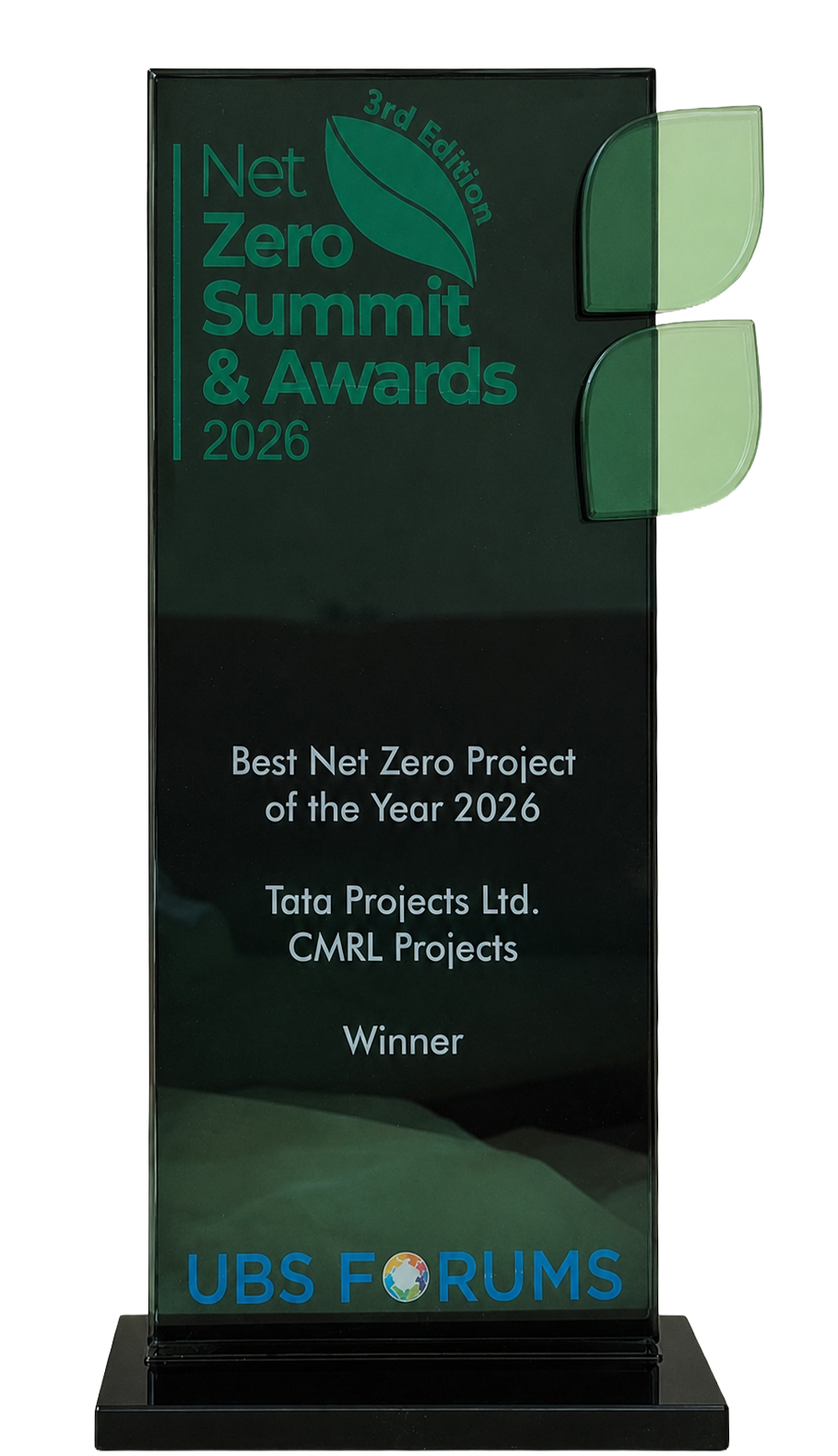
A series of targeted energy conservation, process optimisation, and sustainability initiatives were implemented across tunnelling works, dewatering systems, ventilation, casting yards, waste management, and biodiversity enhancement. These interventions have resulted in substantial reductions in electricity consumption, operational costs, and greenhouse gas emissions, while also delivering operational and maintenance benefits.
- Usage of Automatic Power Factor Correction (APFC) panels for improvement of power factor and maintaining it on an average of 0.97 across TPL which resulted in 38,82,702 kWh savings for FY2026.
- In lighting, 100% of all lights across all the projects used are of LED, instead of conventional lights.
- Usage of Passenger/Material Hoists with Variable Frequency Drive (VFD) Control: 100% of total Passenger/Material Hoists (25 nos.), Tower Cranes (39 nos.) and the Gantry cranes (44 nos.) are with VFD Control resulting in lower starting current, jerk-free start/stop of hoist resulting in longer life of components and lower power consumption.
- Usage of Inverter Welding Machines: 97% of Welding machines are energy efficient Inverter type, that have no magnetic and heat losses like transformer type welding machines.
- 100% of all projects are connected to grid power.
- Increase in use of solar lighting at sites through solar rooftop, solar masts, and mobile lighting.
- Brushless Direct Current (BLDC) wall mounted fans (11,099 numbers) of 30 watt capacity are being installed in some of our new labour camps, replacing the conventional 60 watt fans. BLDC fans consume approximately 50% less energy compared to conventional fans, resulting in significant energy savings. As of now, around 56% of total fans used are BLDC type.
- Digital Procurement Platform: By moving to a digitally evolved and integrated procurement platform such as Moglix, the following were achieved: 5,438 shipment movements were avoided; 62.7% reduction in logistics touchpoints; 2,71,900 KM transportation distance saved; 18,127 litres of diesel saved; 48.8 tonnes of CO₂ emission reduction potential.
Initiatives at the Chennai Metro Project (Phase II) by TPL
Replacement of 50 HP Dewatering Pump with 10 HP High Head Pump
At the North Shaft of the Murari Site, a 50 HP dewatering pump was replaced with a 10 HP double-impeller high-head pump following an energy audit. The intervention significantly reduced power consumption while maintaining the required operational performance.
- Energy Savings: 240 kWh/day (7,200 kWh/month).
- Additional Benefits: Reduced maintenance requirements, improved ease of handling and availability of the 50 HP pump as an emergency standby unit.
Optimisation of Tunnel Ventilation Fan Speed
The operating frequency of two 37 kW ventilation fans deployed at the S96 and S99 tunnels was reduced from 30 Hz to 18 Hz in line with lower manpower deployment and reduced active work fronts. Fresh air circulation and oxygen levels were consistently maintained within required limits.
- Energy Savings: 455 kWh/day (13,650 kWh/month).
- Additional Benefits: Lower noise levels and enhanced equipment life.
Use of Transparent Polycarbonate Sheets at Casting Yard
Transparent polycarbonate roofing sheets were installed at the casting yard to maximise natural daylight availability, thereby reducing dependence on artificial lighting and lowering electricity consumption.
Digital Dry Run Protection for Dewatering Pumps
Digital dry run protection systems were installed on 50 HP, 35 HP, and 10 HP dewatering pumps to automatically prevent operation during no water conditions.
- Energy Savings: 75.5 kWh/day (2,250 kWh/month).
- Additional Benefits: Elimination of continuous operator monitoring, reduced risk of mechanical failures, and extended asset life.
Optimisation of TBM Air Compressor Operation
The loading and unloading pressures, along with delay settings, of 40 kW TBM air compressors at S96 and S99 tunnels were optimised to minimise operational losses.
- Energy Savings: 640 kWh/day combined (19,200 kWh/month).
- Additional Benefits: Reduction in compressor wear, lower maintenance costs, and improved ambient working conditions.
Food Waste Diversion for Biogas Generation
Approximately 200 tonnes of food waste were diverted from landfills through Big Bin for conversion into biogas, supporting circular resource utilisation and renewable energy generation.
- Emission Reduction: Prevention of ~101 tonnes of CO₂ equivalent emissions through the avoidance of landfill methane generation.
Energy Conservation during Tunnel Boring Machine Idling
During TBM idle periods, energy-intensive systems were either replaced or shut down through system modifications, such as switching to LT supply, replacing pneumatic pumps with electrical pumps, and manual valves instead of pneumatic ones.
- Energy Savings: ~1,000 kWh/day (30,000 kWh/ month).
- Additional Benefits: Extended equipment life and reduced expenditure on compressor maintenance and spare parts.
Casting Yard Energy Conservation through Equipment Optimisation
Energy efficiency at the casting yard was enhanced through the replacement of pneumatic tools with electrical alternatives, optimisation of compressor pressures and deployment of a dedicated small-capacity compressor for specific applications.
- Energy Savings: 6,053 kWh/month.
- Additional Benefits: Improved productivity and lower energy consumption per ring produced.
Plantation and Biodiversity Enhancement
A total of 11,230 saplings were planted across multiple locations over the project period of 4 years. With continued maintenance, these plantations are expected to reach maturity within approximately three years.
- Expected Carbon Sequestration after Maturity: ~247 tonnes of CO₂ annually, alongside enhanced biodiversity, and increased flowering, fruiting and bird nesting activity.
Due to these initiatives, the project has an estimated emission reduction of 4.33 tCO2e/month.
Total Renewable Energy Consumption due to Rooftop Solar System was 6,00,099 kWh at capacity 617 kWp for FY2026. Total Renewable Energy Consumption from 595 solar streetlights of 71.5 kWp and 287 solar streetlights of 30 kWp at various projects across TPL is approximately 2,94,954 kWh. Total emissions reduction due to RE Consumption is 1,196 tCO2e.
The integrated implementation of energy efficient equipment, operational controls, waste to energy initiatives, and ecological restoration has delivered significant energy savings, cost reductions, and carbon mitigation. Collectively, these initiatives demonstrate a strong commitment to operational excellence, environmental sustainability, and alignment with ESG objectives, while also improving asset reliability and workplace conditions.
Air Quality Management

As a responsible organisation, Tata Projects adopts a proactive approach to manage air quality across its operations. Our strategy focuses on controlling emissions and dust through a combination of engineering controls, operational practices, and continuous monitoring to minimise environmental impact and ensure regulatory compliance.
- Ambient air quality regularly monitored by NABL-accredited labs measuring SO2, NO2, PM10, PM2.5, CO, NH3, CH4 and C₆H₆ over continuous 24-hourly cycles, aligned with CPCB guidelines
- Air quality data publicly displayed at project site entrances, complemented by PTZ cameras for environmental surveillance
- Mist spray guns deployed to control dust; real-time Air Monitoring Units (AMIU) at strategic locations
- Use of noise barriers and meters to manage site noise levels
- In-house modification of conventional water tankers into advanced sprinkling systems, reducing water and fuel usage
- Retrofitted emission control devices in DG sets at the NIAL site
Energy Management

As a responsible organisation operating in an energy-intensive sector, Tata Projects adopts a proactive approach to manage energy use and emissions. Our strategy combines technological, operational, and behavioural interventions, including the use of APFC panels, LED lighting, VFD-enabled equipment, inverter welding machines, and optimisation of grid power.
| Metric | FY2026 | FY2025 | FY2024 |
|---|---|---|---|
| Renewable Energy Consumption (GJ) | 6,014 | 3,558.14 | 4,255 |
| Non-Renewable Energy Consumption (GJ) | 9,63,53 | 11,45,197 | 14,12,083 |
| Total Energy Consumption (GJ) | 9,69,537 | 11,48,755 | 14,16,338 |
| Total Energy Intensity (GJ / Cr) | 59 | 70 | 82 |
| Total Energy Intensity (GJ / Employee) | 178 | 180 | 223 |
| YoY Energy Consumption - HSD (GJ) | 7,30,197 | 9,17,697 | 10,95,106 |
| YoY Energy Consumption - LPG (GJ) | 9,830 | 26,869 | 83,967 |
| YoY Energy Consumption - Grid Electricity (GJ) | 2,23,434 | 2,00,340 | 2,23,952 |
| Cumulative Renewable Power Generated (kWh) | 16,70,490 | 9,88,373 | 11,81,875 |
| Project Sites Run by Renewable Energy (count) | 35 | 30 | 4 |
Our approach to energy management focuses on adopting cleaner and more efficient solutions across project sites to reduce dependence on conventional power sources and improve operational efficiency. This includes investments in renewable energy applications such as rooftop solar installations and solar-powered street lighting.
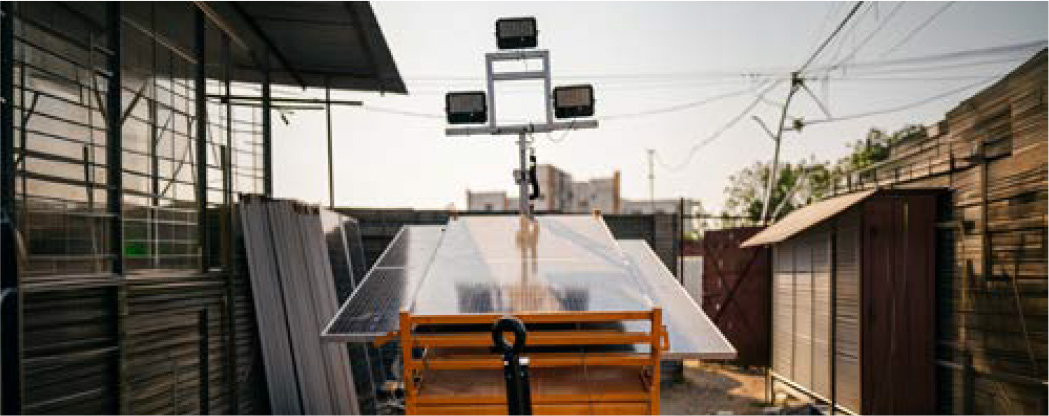
- A total of 302 kWp rooftop solar capacity has been installed across multiple sites, including TCS Noida, Chennai Metro Rail Limited (CMRL), Agratas, and CPRR, generating over 1 Lakh kWh of clean energy and reducing carbon emissions by 85 tonnes.
- We piloted Mobile Solar Light Masts across four project sites including Tata Semiconductor Assembly and Test Pvt. Ltd. (TSAT) Assam and Dholera, replacing diesel-powered lighting with a cleaner, cost-efficient solution. Each mast delivers 360° illumination across a 300-400 metre radius, with just 4-5 units sufficient to illuminate a 12-acre site, while offering easy mobility, reusability and reliable overnight operation. Over a five-year period, each mast is expected to save ₹18.5 Lakh, 129.58 GJ of energy and 9.6 tCO₂e compared to conventional diesel lighting, supporting both operational efficiency and decarbonisation.
Rooftop Solar Installation at
Microsoft Noida Workmen Camp
A 20 kWp rooftop solar plant was installed at the project workmen camp at the Microsoft Noida site to reduce the carbon footprint of site facilities and promote sustainable construction practices. Commissioned in March 2026, the system comprises 34 high-efficiency solar modules, a 20 kW on-grid inverter, DG-PV synchronisation, zero-export controls, and digital monitoring, ensuring safe, reliable, and compliant operation. The plant generated over 828 kWh of clean energy during the first month. With its rapid deployment, safety-focused design, and strong ESG outcomes, the project serves as a scalable and replicable model for integrating renewable energy into temporary construction infrastructure.
Water Management

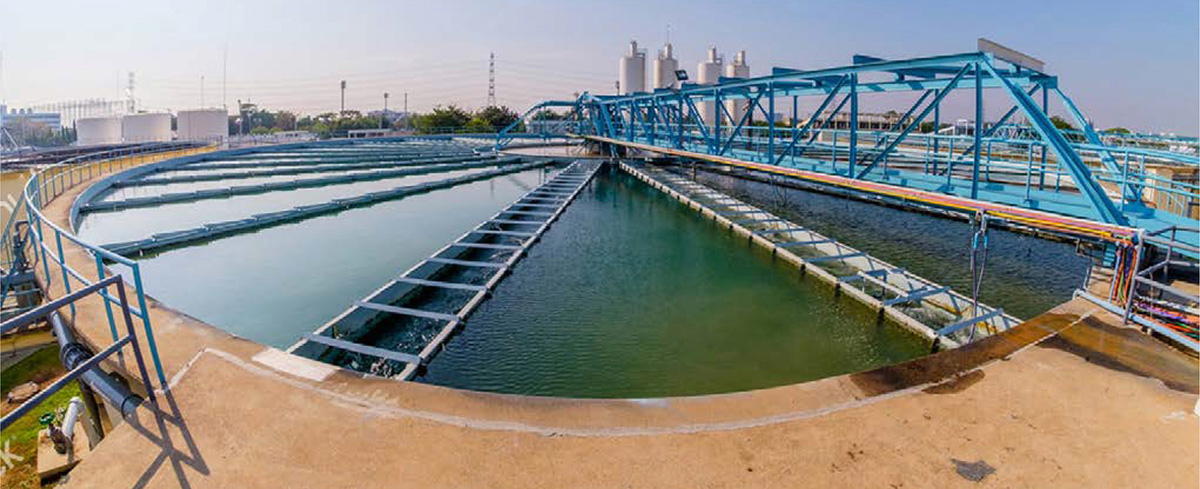
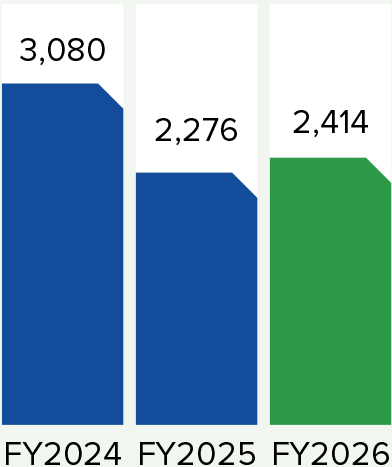
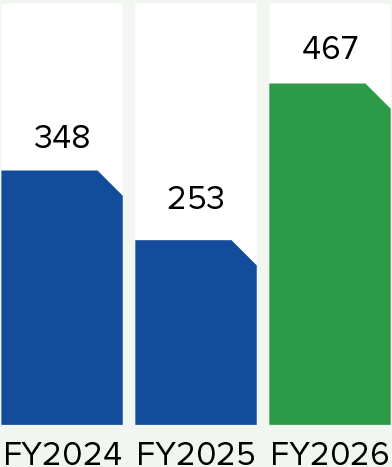
At Tata Projects, we adopt comprehensive water management practices to reduce consumption, prevent contamination, and ensure responsible use across our construction activities. Our project KPIs are aligned with the goals of Project Aalingana, including replenishing freshwater consumption by 2030 and, replenishing more fresh water than consumed by 2040. In line with this, we are progressing towards 100% recycling and reuse of wastewater, while implementing measures to reduce overall water withdrawal.
- Daily monitoring of water consumption supported by real time tracking through IoT enabled devices and periodic third party audits to ensure compliance with ISO 10500:2012 water quality standards.
- Installation and operation of Sewage Treatment Plants (STPs) and Effluent Treatment Plants (ETPs), including STPs at labour colonies, for effective wastewater treatment.
- Preparation and periodic review of water balance statements and wastewater utilisation charts to monitor efficiency and identify conservation opportunities.
- Reuse of treated wastewater for non-potable applications such as gardening, landscaping, dust suppression, wheel washing, construction activities and curing.
- Implementation of rainwater harvesting systems to augment water availability and reduce dependence on external water sources.
- Installation of inlet and outlet water meters at critical points including STPs, RO plants and sedimentation tanks to strengthen measurement and control.
- Adoption of water efficient construction practices, including the use of curing compounds, concrete admixtures, drip curing techniques and synchronised curing schedules to minimise water consumption.
- Utilisation of RO reject water for flushing, dust suppression, vehicle washing and utensil washing after appropriate quality testing.
- Deployment of advanced water tankers fitted with peripheral mist spray systems to enhance sprinkling efficiency and reduce tanker trips.
- Use of water saving fixtures such as bio blocks in urinals to reduce freshwater consumption in sanitation facilities.
- Reducing water wastage from transit mixer drum cooling through an automatic sprinkler system, EcoSpray.
- At the MRO Hangar Project in Bangalore, treated STP water averaging 20 KL per day is reused for agricultural purposes on the adjoining 8 acre green land.
Water Consumed
(ML)
Water Recycled
(ML)
Water Withdrawal
(ML)
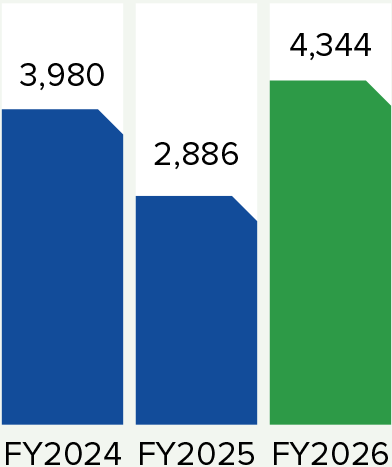
Water Parameters in FY2026
| Withdrawal (ML) | Consumption (ML) | Discharge (ML) | Recharge (ML) | |||||
|---|---|---|---|---|---|---|---|---|
| Overall | Water stressed | Overall | Water stressed | Overall | Water stressed | Overall | Water stressed | |
| Surface Water | 2,415 | 576 | 1,930 | 427 | 0 | 0 | ||
| Groundwater | 1,738 | 391 | ||||||
| Seawater | 0 | |||||||
| Produced Water | 0 | |||||||
| Third-party Water | 2,346 | 552 | ||||||
| Others (to specify) | ||||||||
| Municipal Water | ||||||||
| Rainwater from RWH Facility | ||||||||
| Purchased Drinking Water | 261 | 60 | ||||||
| Total | 4,345 | 1,003 | 1,930 | 427 | ||||
Waste Management

We maintain stringent waste management practices across all stages of our operations, aligned with Project Aalingana's goal of achieving Zero Waste to Landfill by 2030. Our approach begins at the procurement stage, where quantities are carefully aligned with RFC drawings to minimise excess and avoid overordering.
We track both hazardous and non-hazardous waste systematically, with hazardous waste managed and disposed of through authorised recyclers in accordance with regulatory requirements. Non-hazardous waste, such as steel, is directed towards recycling, while cement usage is optimised through bulk procurement, silo-based handling, and digital tracking systems.
We also focus on on-site reuse, repurposing concrete waste for applications like paver blocks and earth pits, and utilising tested concrete cubes for fabrication purposes. In addition, awareness initiatives during Tata Sustainability Month encourage employees to actively contribute to waste reduction, in line with Tata Sustainability Group guidelines.
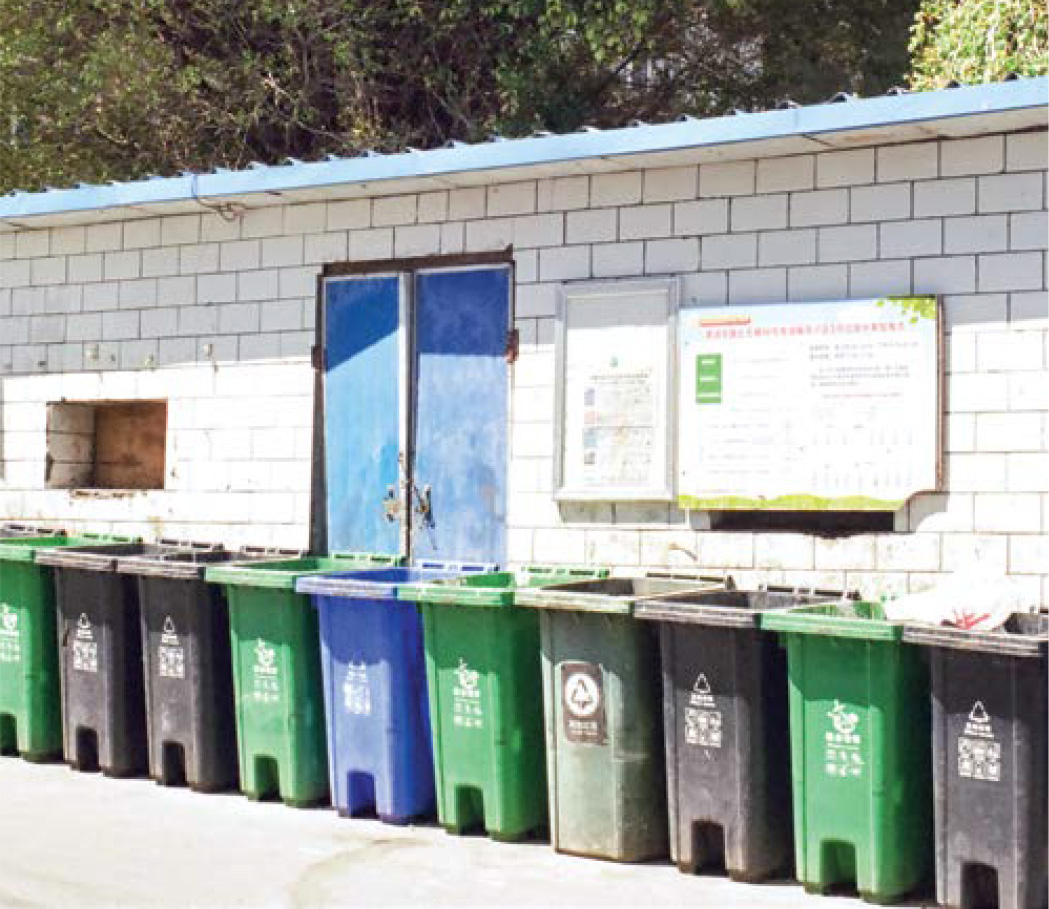
Track Both Hazardous Waste and Non-hazardous Waste
Hazardous waste is managed and disposed of in accordance with regulatory requirements through authorised recyclers.
Non-hazardous waste, such as steel, is directed towards recycling.
Cement usage is optimised through bulk procurement and silo-based handling supported by digital systems.
Concrete waste is repurposed for applications such as paver blocks and earth pits, while tested cubes are reused for tank fabrication.
| Parameter | FY2026 | FY2025 | FY2024 |
|---|---|---|---|
| Total Solid Waste Generated (MT) | 21,264 | 41,705 | 32,741 |
| Hazardous Waste Generated (MT) | 7,167 | 4,042 | 1,967 |
| Hazardous Waste Sent to Landfill (MT) | 1,132 | 726 | 451 |
| Non-hazardous Waste Generated (MT) | 11,807 | 37,658 | 30,774 |
| Non-hazardous Waste Sent to Landfill (MT) | 2,221 | 525 | 7 |
| Total Plastic Waste Generated (MT) | 107 | 27 | 122.6 |
| Spent / Waste Oil Generated (KL) | 6,673 | 568 | 6,620 |
We are transforming waste management practices by adopting circular, resource-efficient solutions that convert waste streams into valuable inputs, reducing environmental impact while improving operational efficiency across project sites.
Integrated Waste-to-Energy and Composting System
At Noida International Airport (NIAL), we established an integrated organic waste management system during the construction phase, processing ~800-850 kg/day of waste generated by a large workmen colony. The facility combines a Bio-Methanation Unit that converts food waste into biogas for cooking and bioslurry for horticulture, with a fully automated composting unit that produces nutrient-rich compost for site landscaping. This system enables 100% waste segregation, reduces landfill dependency, and lowers emissions from waste transportation and disposal.
Sustainable Scaffolding Management
A Kaizen initiative introduced a standardised scaffold refurbishment system to address asset deterioration at project sites.
Centralised facilities at Nagpur and Ghaziabad, supported by shot blasting, enabled restoration of reusable scaffolds instead of disposal. Extended asset life, reduced material waste, and delivered significant cost savings, while strengthening circular construction practices. The initiative is being scaled across additional regions.
Paddy Stubble as a Circular Resource
We introduced paddy stubble as an alternative input for the composting process, addressing both material shortages and local air pollution from stubble burning. By sourcing stubble from on-site waste and nearby farms, we reduced reliance on conventional inputs while preventing emissions associated with open burning. This initiative demonstrates how agricultural residue can be repurposed into a productive input, creating both environmental and operational value.
-
₹,
Saved with LPG replacement with biogas
-
₹,
Saved due to on-site compost / manure production
-
₹,,
Saved by avoiding external waste disposal and transport charges
-
₹,,
Saved by locally sourced sawdust / paddy stubble replacing purchased sawdust

Biodiversity


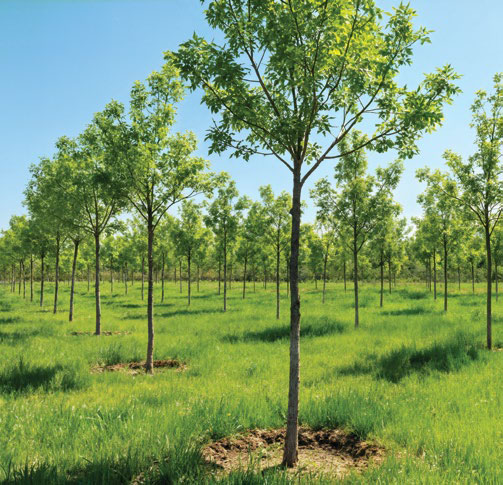
Launched in 2016 on the World Environment Day, Tata Projects' Green Thumb initiative is focused on restoring green cover and addressing the climate change issue. What began as an employee engagement effort, has evolved into a large-scale environmental programme, driven by a unique 'You click, we plant' model that enables individuals to pledge tree plantations through a digital platform, with each participation translating into trees planted across project sites in India.
Over the years, the initiative has witnessed strong global participation, further amplified through digital outreach campaigns. Spanning multiple project locations, Green Thumb continues to drive large-scale plantation efforts, contributing meaningfully to environmental conservation and reinforcing the Company's commitment to sustainability.
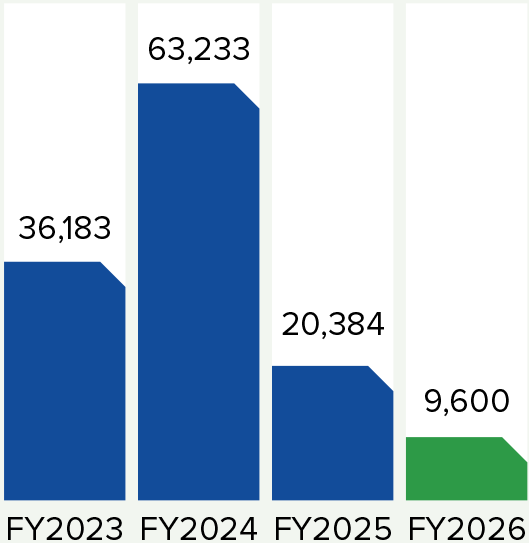
Total Saplings Planted
No. of Saplings Planted
(Nos)
As part of the Hyderabad Microsoft Data Centre project's community engagement efforts, we conducted a plantation drive on 18th September, 2025 at ZP High School, Hayathabad, reinforcing our commitment to environmental stewardship and biodiversity conservation under the Tata Group's Project Aalingana (Preserving Nature and Biodiversity). The initiative saw active participation from 115 volunteers, each contributing approximately 7 hours, resulting in the plantation of 24 saplings and positively impacting nearly 400 individuals through awareness and engagement activities.
In addition to afforestation efforts, the programme also included fire-fighting training for students, enhancing local preparedness and safety awareness. This initiative reflects our integrated approach to community development by combining ecological restoration with capacity building at the grassroots level.
-
Volunteers engaged in the plantation drive
-
Hours
Contributed by each volunteer engaged in the plantation drive
-
Individuals positively impacted through awareness and engagement activities
Driving Awareness to Action
To mark World Environment Day 2025, we organised a two-day programme on 5th June, 2025 aligned with the global theme 'Ending Plastic Pollution Globally'. The initiative was designed to strengthen environmental awareness and encourage behavioural change across project sites through a mix of engagement, learning, and action-oriented activities.
The celebrations included inaugural addresses, an environmental quiz competition for workmen and staff, a plantation drive, and collective participation in an environmental pledge and signature campaign. The programme concluded with a Rewards and Recognition ceremony to acknowledge active participation and reinforce a culture of sustainability across the organisation.

Approach
The Manufacturing Unit (TMU) at Umred, Maharashtra, is undergoing expansion while simultaneously aligning its operations with sustainability principles and select UN Sustainable Development Goals (SDGs). As part of this journey, TMU has identified landscaping and ecological restoration as a key focus area, with biodiversity conservation embedded within campus development.
The site currently includes scattered tree cover, a developing green patch near the Sewage Treatment Plant (STP), and peripheral land with potential for nature-based solutions. Recognising the ecological value of industrial campuses, TMU has initiated a biodiversity-focused landscaping strategy, prioritising native species, habitat creation, and ecosystem services.
Action
TMU has initiated a native bamboo based green belt along the plant perimeter and internal pathways using species such as Dendrocalamus strictus, Bambusa bambos, Bambusa tulda and Bambusa vulgaris. A designated area was developed as a bamboo nursery to support propagation and long term plantation continuity. The green patch near the STP is being enhanced as a butterfly and pollinator garden through the introduction of native host plants including citrus species, curry leaf, milkweed and Saraca asoca (Ashoka tree). These plants support butterfly species such as Plains Cupid, Dark Cerulean, Common Grass Yellow, and Ciliate Blue, and support common songbirds such as the Magpie Robin, Red-vented Bulbul, Purple Sunbird, House Sparrow.
Scrap material has been removed from landscaped areas to prevent soil contamination, composting of canteen waste is encouraged to improve soil health, and the use of exotic ornamental species is being avoided.
This intervention strengthens trophic diversity and establishes a functioning micro-ecosystem within an industrial setting. Bamboo plantations contribute to carbon sequestration, enhance air quality, noise reduction and microclimate regulation, while pollinator gardens increase floral diversity and ecosystem resilience. Overall, the initiative strengthens environmental stewardship and enhances the ecological value of the TMU campus.
Our environmental approach focuses on efficient material management, the use of sustainable materials, adoption of advanced modular construction methods, and effective water and waste management. We have established strong material management systems to optimise resource use across operations and support circular economy principles. In addition, we promote a sustainable supply chain by partnering with environmentally responsible vendors.
This integrated approach to sustainable construction is built on three key pillars:

Optimised design and construction practices, adoption of sustainable building technologies, and a shift towards environmentally responsible material choices
Minimise material use and reduce waste generation

Promote recycling of construction materials and other resources
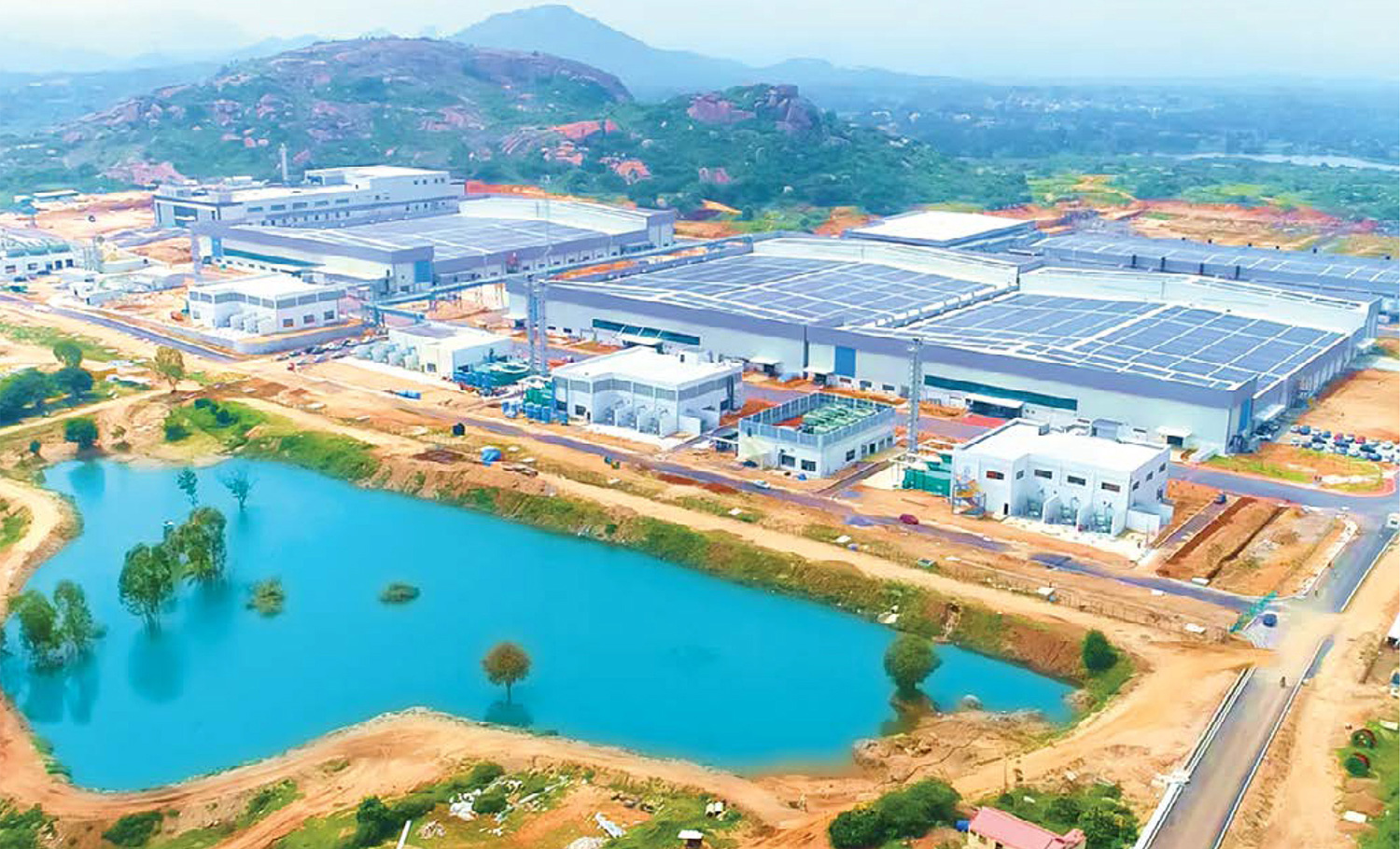
The Micron Semiconductor facility in Sanand is being developed as a model of green industrial infrastructure, integrating sustainable design principles and resource-efficient systems. The project incorporates LEED Gold-aligned building practices, supported by Zero Liquid Discharge (ZLD) systems for complete wastewater recycling and Ultrapure Water (UPW) recycling to maximise water reuse. Rainwater harvesting infrastructure further strengthens water conservation efforts, while advanced construction approaches such as 4D BIM and modular construction help reduce material waste and enhance execution efficiency.
We are committed to sustainable construction practices through efficient material management, focusing on reducing consumption, promoting reuse, and optimising resource allocation across our sites. We use M-Sand, produced from recycled construction and demolition waste, as a substitute for natural sand, thereby minimising landfill waste. Crushed sand is also adopted as an alternative to river sand, helping reduce the environmental impact of mining. To further limit dependence on natural resources, we promote the use of alternative materials such as fly ash, GGBS, fly ash bricks, AAC blocks, and PPC cement, which are derived from industrial by-products, require lower energy for production, and help reduce emissions.
We also adopt modular construction techniques, including precast and prefabricated components, to improve efficiency and minimise material wastage. In addition, we integrate Value Engineering and Lean Engineering principles, supported by
Smart Water Storage at Dholera
To improve resource efficiency, Tata Projects deployed a 162 KL Modular Steel Water Tank at the Dholera project in place of a conventional Reinforced Cement Concrete (RCC) water tank. The modular solution reduced installation costs from approximately ₹20 Lakh to ₹7.2 Lakh, delivering an initial saving of ₹11 Lakh. Its reusable design enables relocation across project sites, with each subsequent deployment expected to generate an additional ₹18 Lakh in savings, making it a cost-effective and sustainable solution for EPC projects.
Building Information Modelling (BIM) and advanced digital tools, to enhance accuracy, optimise material usage, and reduce costs. Detailed design analysis, safe construction practices, and precise material planning further help minimise rework and ensure efficient, sustainable project execution.
Raw Material (in m3)
| ESG Parameter | UOM | FY2026 |
|---|---|---|
| Fly Ash | m3 | 66,34,133 |
| GGBS | m3 | 17,67,499 |
| Fly Ash Bricks | Number | 28,42,096 |
| AAC Blocks | m3 | 61,053 |
| M-Sand | m3 | 9,99,826 |
| Micro Silica | m3 | 40,828 |
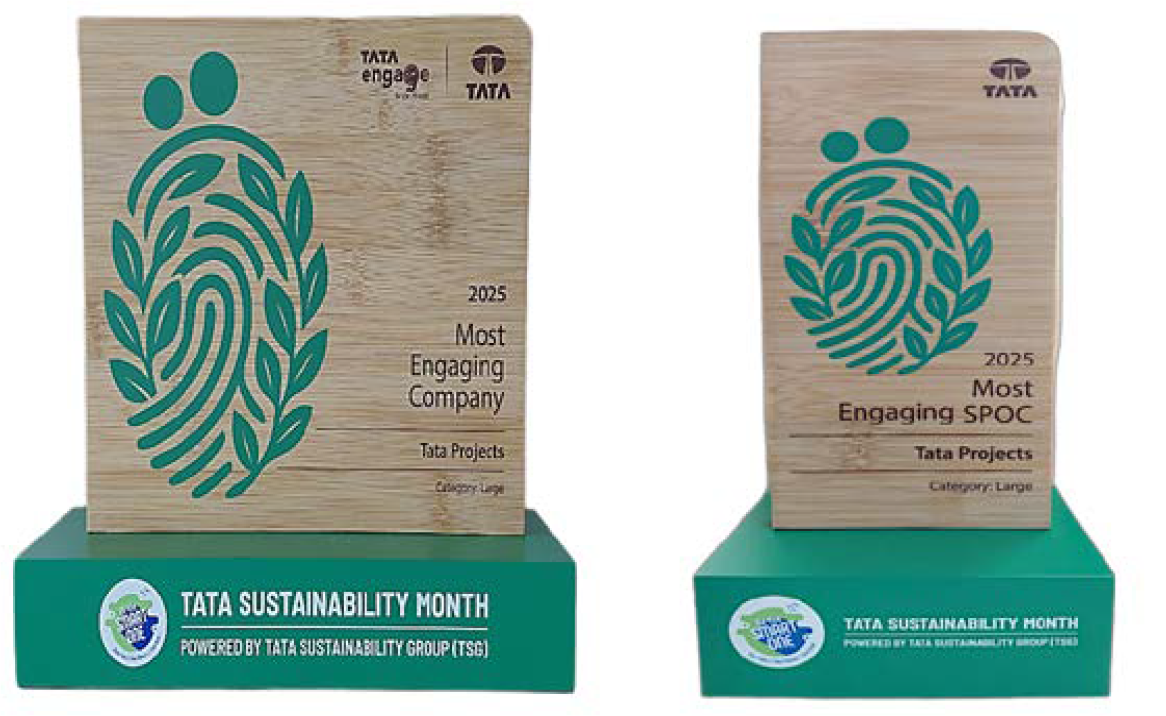
Tata Projects was awarded the Most Engaging Company and the Most Engaging SPOC for exceptional leadership in driving engagement during the Tata Sustainability Month in the Large Company category by the Tata Sustainability Group.
Low-Carbon Concrete Use
At Noida International Airport (NIAL), we adopted LC3 (Limestone Calcined Clay Cement) for Pavement Quality Concrete in FY2026 as part of our low-carbon construction approach. Standardised under IS 18189:2023, LC3 replaces a portion of Portland clinker with calcined clay and limestone, significantly reducing the embodied carbon footprint of concrete while maintaining performance requirements. The solution is being positioned for wider application across pavements, industrial floors, and structural concrete, supporting reduced emissions, cost efficiency, and alignment with project sustainability goals.

A technical session on 'Climate and Disaster Risk Assessment' was organised for Tata Projects' frontline managers at the TERI Campus in October 2025. The session attended by about 45 employees from various sites and verticals covered the following topics:
- Climate and Disaster Risk Assessment of Facilities and/ or Project Sites.
- Weather-related disaster and climate risk analysis for urban areas.
- Application of AI/ML tools for seasonal prediction, statistical downscaling, bias-correction etc.,
- TERI's initiatives with Corporates and potential opportunities for collaboration.