

Manufactured Capital

Manufactured capital plays a direct role in reaching excellence in project handling — from the shop floor of manufacturing units to some of the most complex infrastructure sites across India. The year was marked by modernised and redeployed assets, engineering firsts across live project environments, and manufacturing operations evolving from a cost centre into a profit-generating business. As a project scales and complexity grows, so does the importance of the assets we build with, and the discipline with which we manage them.

Delivering Infrastructure
Excellence at Scale

Key Highlights of FY2026

  • 77%

    Capacity Utilisation at TMU

  • ₹129 Cr

    Value of Manufactured Capital

  • 48 KTA

    Installed Galvanising Capacity

Key Focus Areas

  • Capacity Expansion
  • Digital Manufacturing and Visibility
  • Quality Management
  • Asset Modernisation and Optimisation
  • Innovation in Construction

Alignment with SDGs

  • UN Sustainable Development Goal 9: Industry, Innovation and Infrastructure
  • UN Sustainable Development Goal 11: Sustainable Cities and Communities
  • UN Sustainable Development Goal 12: Responsible Consumption and Production
  • UN Sustainable Development Goal 13: Climate Action

The Manufacturing Unit (TMU):

Tower Manufacturing Unit key highlights, FY2026 against FY2025
Key Highlights FY2026 FY2025
Value of Manufactured Capital ₹128.89 Cr ₹95.40 Cr
Investment in New and Upgraded Assets ₹50 Cr ₹55 Cr
Capacity Utilisation 77% 83%
Installed Galvanising Capacity 48 KTA 48 KTA
Productivity Per Unit of Capital 26% 26%
Installed Tower Manufacturing Capacity 40 KTA 36 KTA
Installed Structural Steel Fabrication Facility 24 KTA 12 KTA
Material Costs ₹427 Cr ₹437 Cr
Material supplied 5,20,000+ MT 4,80,000+ MT
Towers Supplied ~5,10,000 MT ~4,70,000 MT

TMU recorded significant progress in FY2026 through infrastructure expansion, new machinery deployment and digital manufacturing controls. It is strengthening its capabilities with the addition of multiple sheds, an administrative office, a raw yard and a galvanisation kettle, alongside the adoption of next-generation machinery — enhancing capacity, operational agility and readiness for future growth.

The launch of the a digital dashboard provides real-time visibility into raw material, work-in-progress and finished goods, improving planning and efficiency.

TMU has also transitioned from a cost centre to a profit-generating business unit, executing external orders for clients such as Adani, Tata Power and Interarch, while contributing to circularity through scrap sales to Tata Steel.

These initiatives have collectively accelerated TMU’s growth trajectory, with the unit reporting positive financial performance over consecutive quarters. This transition of TMU reflects a broader shift driven by innovation, sustainability and operational excellence.

Asset Modernisation and Capacity Expansion

Tata Projects continues to strengthen its asset base through modernisation, digital optimisation, and targeted capacity expansion across equipment, manufacturing, and construction operations. These initiatives are enhancing utilisation, improving productivity, reducing costs, and creating scalable capabilities to support future growth.

Maximising Assets Across Sites

Our Fleet & Resources Management function improves equipment utilisation through digital asset visibility and strategic redeployment. The Alternate Equipment Dashboard, covering 47 equipment categories and 204 owned assets, enables movement of underutilised equipment across projects, unlocking potential annual savings of up to ₹20 Crore. We are also monetising surplus assets through a partnership with Equipment Rentals India. The team demonstrated strong execution capability through the safe commissioning of heavy cranes and support for complex girder erections at major projects.

Circularity in Asset Management

We firmed up our asset management edge by refurbishing and innovating the formwork and scaffolding systems. A refurbishment facility at Ghaziabad, along with the Nagpur centre, extends the asset life and delivers potential annual capex savings of ₹9 Crore. Innovations such as S-Beams and polymer shuttering sheets have further reduced costs, improved reuse cycles, and increased salvage value, generating combined FY2026 benefits of ₹10.95 Crore in capex savings and ₹6.52 Crore in recovered value.

₹10.95 Cr

Combined capex savings from asset circularity initiatives in FY2026

Landmark Deliveries of FY2026

At Tata Projects, manufactured capital reflects how we deploy assets and capabilities to deliver complex outcomes. In FY2026, our teams advanced engineering applications in India, turning challenges into opportunities for innovation and creating lasting value for customers and communities.

  • Pune Double-Decker Flyover

    The Double-Decker Flyover at Savitribai Phule Pune University Chowk spans 1.2 km and is integrated with Metro Line 3 (Hinjawadi–Shivajinagar). The project features a 55-metre steel span, among the largest in India. Through this development, we have enhanced urban mobility, eased congestion at a key junction, and demonstrated our capability in executing complex, multi-level transport infrastructure.

    55 metres One of the largest steel spans in India, used in the Pune Double-Decker Flyover

  • AISATS BLR Logistics Park, Bengaluru

    The AISATS BLR Logistics Park comprises a two-storeyed main warehouse of 2,40,000 sq. ft., integrated cold storage facilities, an 11,000 sq. ft. bonded warehouse, and a dedicated 24,000 sq. ft. office block. The development strengthens Bengaluru’s air cargo and logistics ecosystem by enhancing our warehousing and supply chain capacities.

    2,40,000 sq. ft Main warehouse capacity in AISATS BLR Logistics Park, Bengaluru

  • DFC - Heaviest Open Web Girder Launch

    At Kalamboli, we launched a 110-metre-long Open Web Girder weighing approximately 1,500 metric tonnes using the radial slew method — deployed for the first time in India over Indian Railways. The operation was completed in 2.5 hours against a 3.5-hour block window over active passenger lines, including the Rajdhani route, with zero safety incidents recorded.

    1,500 MT Heaviest open web girder successfully launched at Kalamboli

  • Below-Ground Batching Plant — Rafferty, Hyderabad

    We installed a 90 cu m/hr batching plant 16 metres below ground level at the Rafferty project in Hyderabad, marking a first for us and one of the earliest such applications in India. With 1,200 cu m of raw material storage, the facility enables uninterrupted concrete supply while improving site safety and operational efficiency in confined basement conditions.

    16 metres Below ground level batching plant installation at the Rafferty project in Hyderabad

  • CMRL Underground Metro - Chennai

    Our work for the Chennai Metro project was recognised as the Best Net Zero Project of the Year 2026 for excellence in sustainability and ESG performance. At Kolathur Station, we completed a 254-metre tunnel drive exactly on schedule, while achieving the Tunnel Boring Machine (TBM) relaunch cycle in just 15 days against the industry norm of 30–45 days. These achievements reflect execution speed, sustainability leadership, and strong urban transit capability.

    15 days Tunnel Boring Machine (TBM) relaunch cycle achieved in the Chennai Metro works project

  • Noida International Airport - Greenfield Delivery at Scale

    At 1 Lakh sq. m. with a capacity of 12 Million passengers annually, Terminal 1 of Noida International Airport represents one of our most complex integrated EPC deliveries. The scope included the terminal building, runway, airside and landside infrastructure, cargo terminal, ATC tower, and ancillary facilities — executed as a single coordinated programme. The project achieved over 85 Million safe man-hours with a peak workforce exceeding 100,000, equipped with renewable energy integration, rainwater harvesting, and responsible material use. Delivered ahead of commercial launch with all regulatory approvals, it reinforces our leadership in large-scale greenfield airport infrastructure.

    85 Million+ Safe man-hours achieved during execution of Noida International Airport project

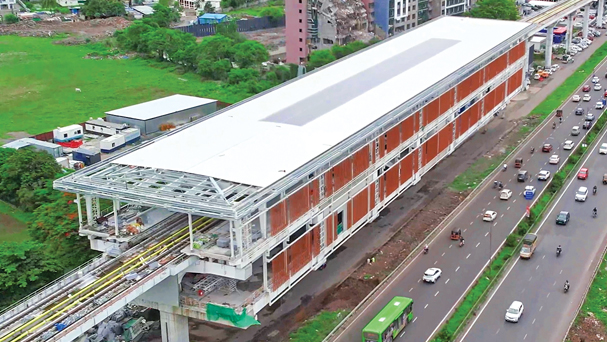
A metro girder launcher placing a deck segment above a busy road
Pune metro

Asia’s First Tunnel Monitoring Laboratory

Tata Projects sponsored the establishment of Asia’s first Tunnel Monitoring Laboratory at MIT World Peace University, Pune. The facility will support advanced research, skill development, and innovation in tunnel engineering, reinforcing our commitment to knowledge creation and industry advancement.

Pune Metro - International Recognition

Research paper by Tata Projects, ʻA hybrid construction method for underground metro station in dense urban area in Pune metro projectʼ, was presented at the World Tunnel Conference 2025 in Stockholm, Sweden. The recognition from global industry peers underscores our engineering innovation and expertise in delivering complex metro infrastructure in challenging urban environments.
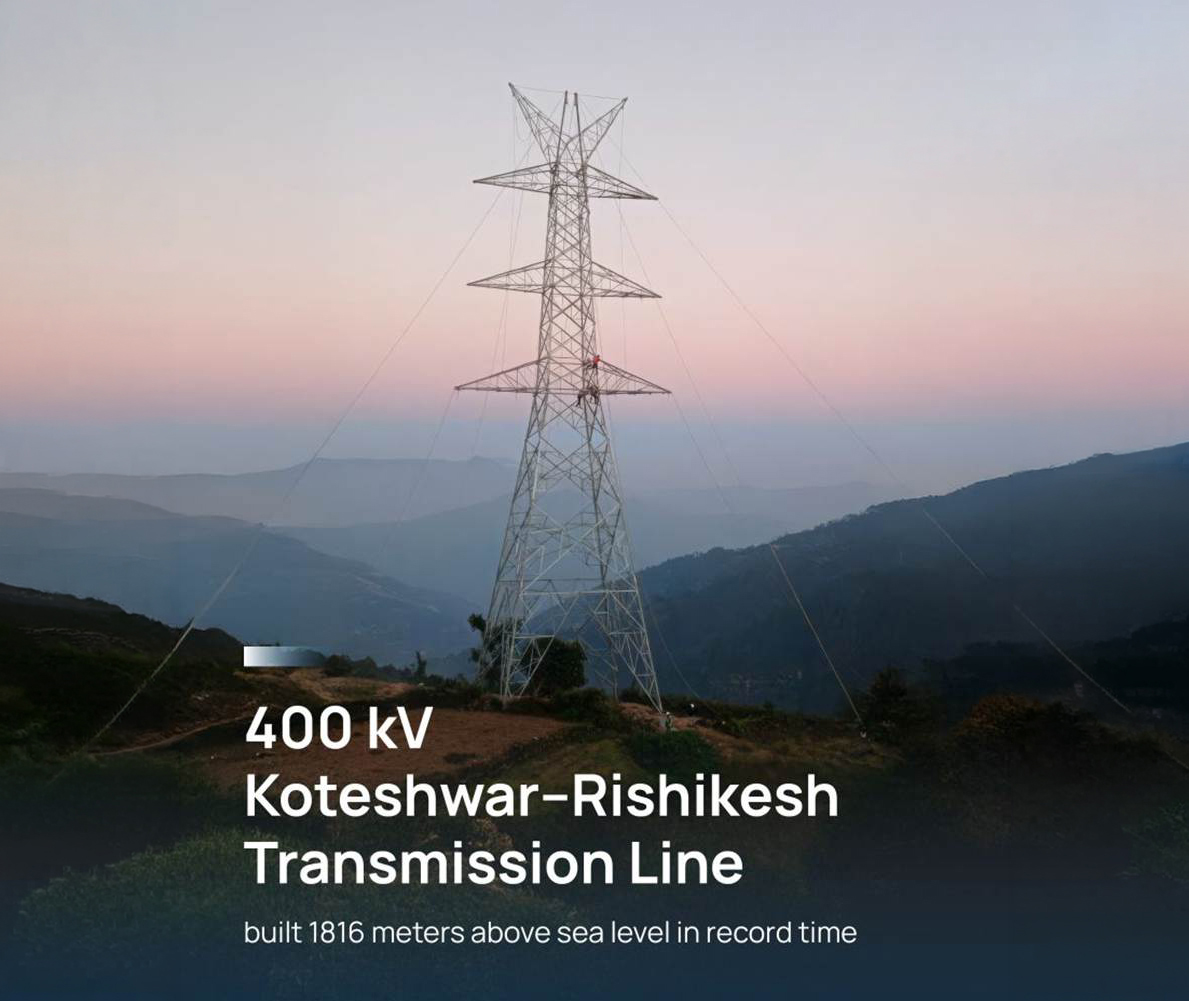
A transmission tower on a Himalayan ridge at dusk

400 kV Koteshwar–Rishikesh Transmission Line

Tata Projects built the 400 kV Koteshwar–Rishikesh Transmission Line, a critical power evacuation corridor traversing the challenging Himalayan terrain across the New Tehri and Dehradun districts. Constructed at elevations of over 1,816 metres above sea level, the project enables the evacuation of up to 1,000 MW of clean hydropower, strengthening grid reliability and supporting India’s renewable energy transition.

Despite difficult terrain and severe monsoon conditions, the project achieved more than 85% physical progress within a year, demonstrating exceptional execution capability and project management. The project also recorded 1.3 Million safe man-hours with zero loss-time injuries (LTIs), reflecting our firm commitment to safety, operational excellence and delivering complex infrastructure in some of the country’s most demanding environments.

A metro girder launcher placing a deck segment above a busy road
Mumbai metro

Mumbai Metro Line 3 Phase 2 - Engineering beneath a Living City

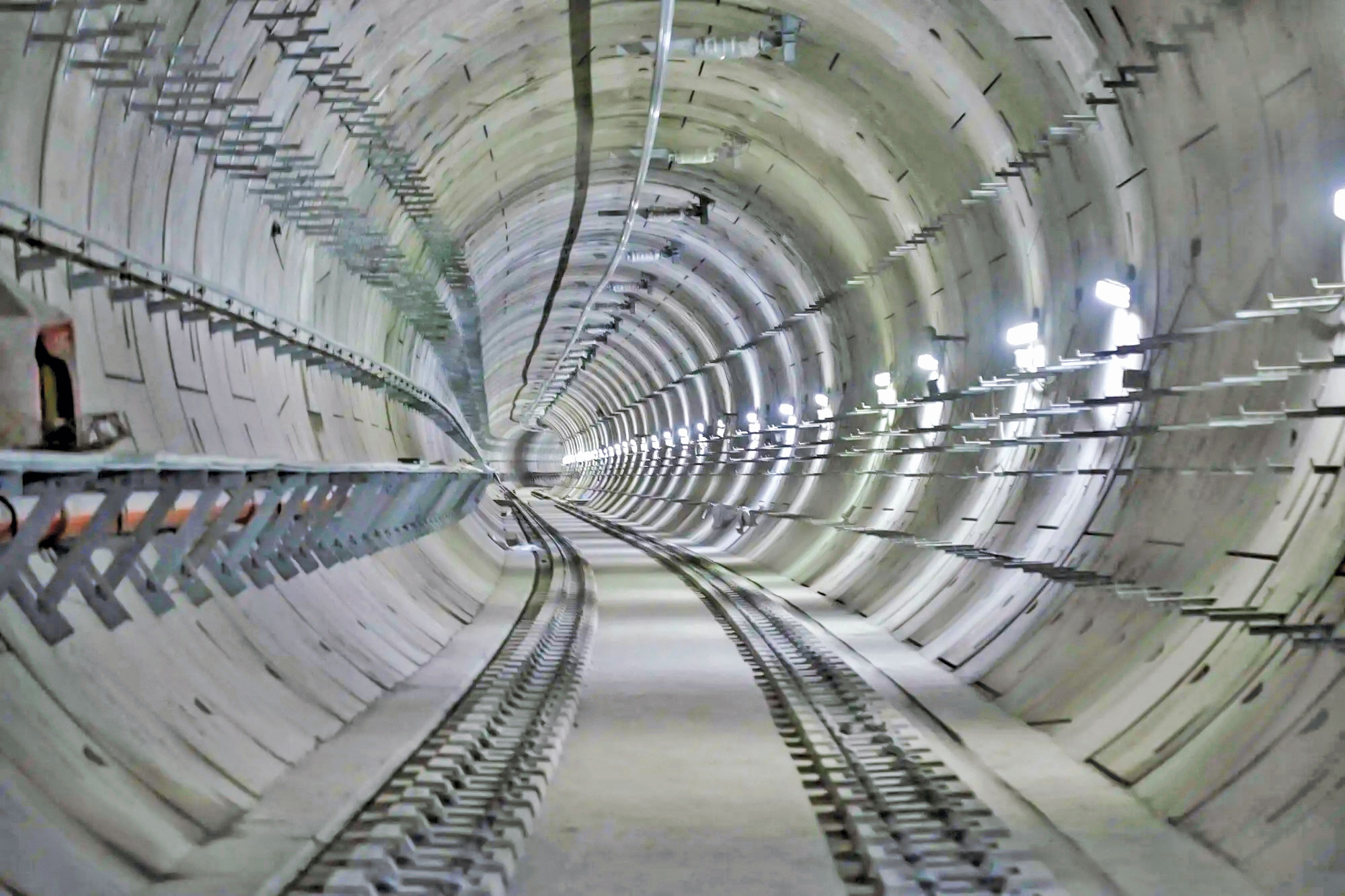
We executed twin tunnel construction beneath densely built urban zones in Mumbai, becoming the first JV partner on the project to launch Tunnel Boring Machines under complex soil conditions. A critical achievement was the successful preservation of a 1,450-mm diameter live water main during station construction. The project also involved extensive utility diversions, including water, sewerage, power, telecom, gas, and traffic systems, all of which were restored or enhanced, ensuring minimal disruption and long-term urban resilience.

1,450 mm Diameter live water main preserved during underground construction of Mumbai Metro Line 3 Phase 2

Worli BDD Chawl Redevelopment

Under Phase 1 of the project, 556 homes were handed over in August 2025, marking a major milestone in the redevelopment of one of Mumbai’s largest housing communities. The broader project includes 33 rehabilitation towers for 9,680 tenants, alongside commercial and sale towers.

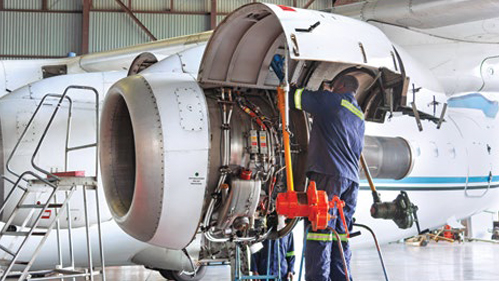
Engineers working on a turbine inside an aircraft maintenance hangar

Taking Flight - Expanding into Aviation Infrastructure

In FY2026, we signed an exclusive partnership with ASI Global to deliver end-to-end turnkey MRO and hangar facility solutions. We deployed 4D BIM simulation for the Air India MRO hangar in Bengaluru — a 250-metre span structure featuring an unsupported steel truss roof, making it one of the most technically demanding aviation projects in the country.

T&D Sets New Benchmarks in Scale and Execution

FY2026 marked a defining year for the T&D Strategic Business Unit, with record-breaking achievements across manufacturing, execution and engineering innovation. During the year, the SBU delivered 100,000 metric tonnes of tower structural steel and erected 75,000 metric tonnes of transmission towers — the highest-ever volumes achieved in a single financial year across multiple geographies. These milestones reflect the collective commitment of the Nagpur Manufacturing Unit, trusted vendor partners and enabling teams who successfully executed a highly demanding and complex scope.

The year also witnessed the deployment of India’s first Double Arm Gin Pole for erecting high-tension towers exceeding 100 MT, demonstrating the SBU’s growing engineering sophistication and execution capability. Further strengthening its credentials was the completion of a 650 km transmission corridor — the longest corridor executed by the Company. After remaining stalled for over a decade, the project was completed in under three years through focused execution and close collaboration with Tata Power. The corridor now facilitates the evacuation of nearly 4,000 MW of power in Uttar Pradesh, significantly enhancing regional grid reliability and supporting the State’s growing energy requirements.

Engineering Smart Metro-Retail Integration Solutions

Tata Projects delivered an innovative engineering solution for integrating retail operations within Mumbai Metro Line 3, enabling Tata Trent stores at underground metro stations while maintaining structural integrity and operational efficiency. The project involved addressing the complex challenge of facilitating seamless logistics within deep underground spaces without compromising station safety or reducing valuable retail area.

The original proposal involved installing lifts through the station roof slab, which carried significant risks related to structural weakening, waterproofing concerns and loss of nearly 45 square metres of retail space. To overcome these challenges, Tata Projects developed an alternative solution by relocating the lifts along the station walls instead of cutting through the slab. This approach significantly reduced structural intervention, preserved waterproofing integrity and maximised usable retail space by requiring only limited wall openings with localised strengthening.

The revised solution required excavation depths of nearly 11 metres in constrained underground conditions. To ensure safe and efficient execution, secant piles were deployed to create a watertight retaining structure capable of supporting deep excavation activities. In addition, a bidirectional lift system integrated with a staging lobby was introduced to streamline backend logistics and improve operational movement within the retail spaces.

The solution successfully enhanced retail usability, improved operational efficiency and ensured structural safety, demonstrating Tata Projects’ capability to deliver collaborative, engineering-led solutions for complex urban transit infrastructure. The project establishes a strong benchmark for seamlessly integrating commercial and retail ecosystems within next- generation metro infrastructure developments.

Quality, Safety and Compliance in Manufacturing

At Tata Projects, we continue to strengthen quality, safety, and compliance across manufacturing operations through standardised systems, capability building, and disciplined process controls. The focus remains on first-time-right execution, reduction of rework, adherence to statutory and operational standards, and continuous improvement across facilities such as TMU Nagpur and other production locations.

Our Integrated Management System (IMS), certified by ISO 9001, ISO 14001, ISO 45001 and ISO 37000, forms the compliance backbone across manufacturing processes, with EPM documents hosted exclusively on the Business Excellence Microsite for controlled access and audit-readiness. In FY2026, we partnered with Indian Register Quality Systems (IRQS) for structured gap assessments, internal auditor refresher training and lead auditor certification programmes across business units.

Total Quality Management (TQM)

In FY2026, Tata Projects further advanced its Total Quality Management journey by embedding a culture of continuous improvement and operational excellence across the organisation. World Quality Day 2025, held under the theme, Quality: Think Differently, reinforced leadership commitment to quality as a shared organisational responsibility. The Kaizen Competition attracted over 150 improvement entries, reflecting strong employee participation in process enhancement and waste reduction. The Quality Connect Series conducted 63 learning sessions with over 10,000 participants and generating more than 75,000 views.

TPL Quality Academy

The TPL Quality Academy was formally launched by senior leadership to stress on structured learning, standardisation of the TPL Way of Working, and a measurable reduction in the cost of non-quality through first-time-right execution.

The Academy is built on a three-pillar architecture:

  • Foundation Programmes

    Build awareness of core quality principles, standards, and first-time-right practices for all employees

  • Advanced CI Training

    Develop problem-solving capabilities through Root Cause Analysis (RCA), Failure Mode and Effects Analysis (FMEA), and advanced quality control tools

  • SME Technical Training

    Provide specialised technical knowledge tailored to specific businesses, functions, and Strategic Business Units (SBUs)

All three pillars are supported by a structured certification framework with three progressive levels — Participant, Champion, and Expert — with e-learning modules and a repository of lessons learned for wider reach.

Building Structured Problem-solving Through Six Sigma

As part of strengthening process excellence across its manufacturing operations, Tata Projects conducted Phase 1 of Six Sigma (DMAIC) training at the TMU Nagpur factory. The programme was facilitated by the Company’s in-house Black Belt expert, Mr. Nishant Umare, and witnessed participation from more than 32 employees representing cross-functional teams, including Engineering, Production, Quality, Safety and Planning.

The training focused on building structured, data-driven problem-solving capabilities and promoting a culture of continuous improvement across operations. More than 10 improvement projects are currently underway as part of the initiative, reflecting active application of DMAIC methodologies to real business and operational challenges.

Designed using an engagement- and activity-based learning approach, the programme enabled practical understanding of Six Sigma concepts while encouraging collaborative problem-solving and process optimisation.

Quality Excellence and Continuous Improvement

Quality‐driven initiatives across Tata Projects continue to deliver meaningful financial outcomes through focused Kaizen and value engineering interventions. A total of 34 horizontal deployment Kaizens have contributed to enterprise‐wide cost impact, reinforcing quality as a strong enabler of cost efficiency, operational excellence, and sustainable execution.

FY2026 Cost Savings Snapshot

  • ₹22.25 Cr Optimisation in Concrete
  • ₹28.72 Cr Value Engineering
  • ₹8.56 Cr Savings from other Kaizens

Driving Operational Excellence through Quality Leadership

FY2026 was a year of strong momentum for Tata Projects, marked by excellence in quality, national recognition and deeper employee engagement across the organisation. The year reinforced our commitment to embedding quality as a core driver of operational excellence and customer value creation.

Customer confidence also remained strong during the year, reflected in the receipt of more than 19 appreciation letters from leading clients across infrastructure, power, industrial and government sectors.

We continued to strengthen our quality culture through focused initiatives such as the Quality Academy, Kaizen Hour sessions, Quality Connect programmes and enterprise-wide capability-building interventions. Broad-based employee participation in Quality Month activities, Kaizen championships and technical knowledge-sharing forums further reinforced collective ownership, collaboration and continuous improvement across teams.

National Recognition for Continuous Improvement

Tata Projects received Platinum Awards in two prestigious categories at the 18th National Competitiveness & Cluster Summit, organised by the Confederation of Indian Industry (CII), recognising its commitment to operational excellence and continuous improvement.

The award-winning initiatives, implemented at the Chennai Peripheral Ring Road Project, included:

  • Kaizen Competition

    TrueView Shuttering Window – Clarity in Every Layer during Concrete Pouring

  • Case Study Competition

    Pull System in Concrete Management

These recognitions reflect our continued focus on innovation, lean practices and process excellence, driving higher productivity, improved quality and enhanced project execution across our operations.